Intro
Most websites still rely on passive content — long pages, static CTAs, and disconnected user journeys.
But visitors today expect something more immediate, more interactive, and more personal.
AI widgets are changing that — giving every page the ability to listen, respond, and guide visitors toward meaningful actions.
1. The Problem: Passive Pages Don’t Engage
Even with great design and clear copy, most users scroll, skim, and leave.
Traditional engagement tools (pop-ups, forms, chatbots) often interrupt rather than help.
The result?
- Low on-page time
- High bounce rates
- Missed conversion opportunities
2. The Shift: From Information to Interaction
AI changes how people experience content.
Instead of reading, visitors can ask, explore, and discover.
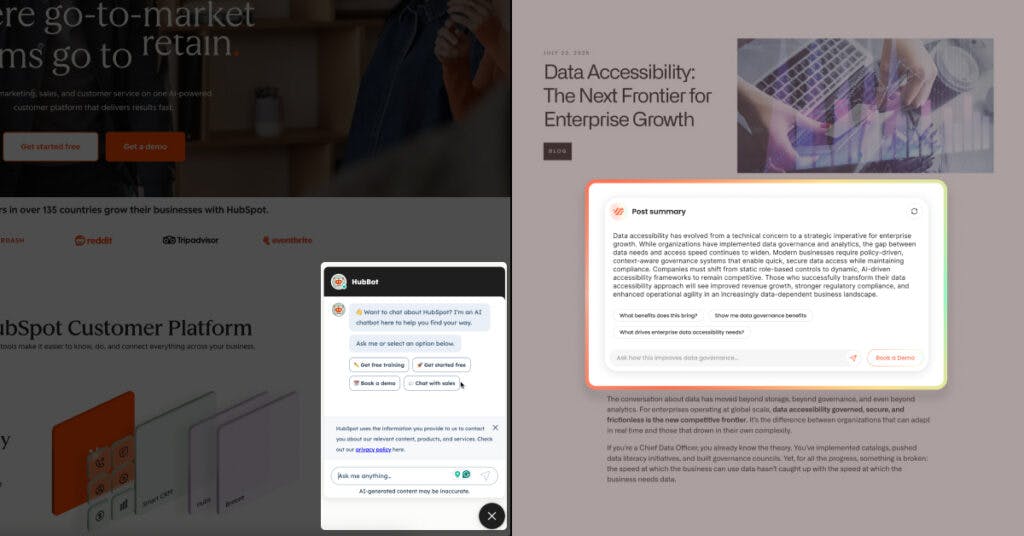
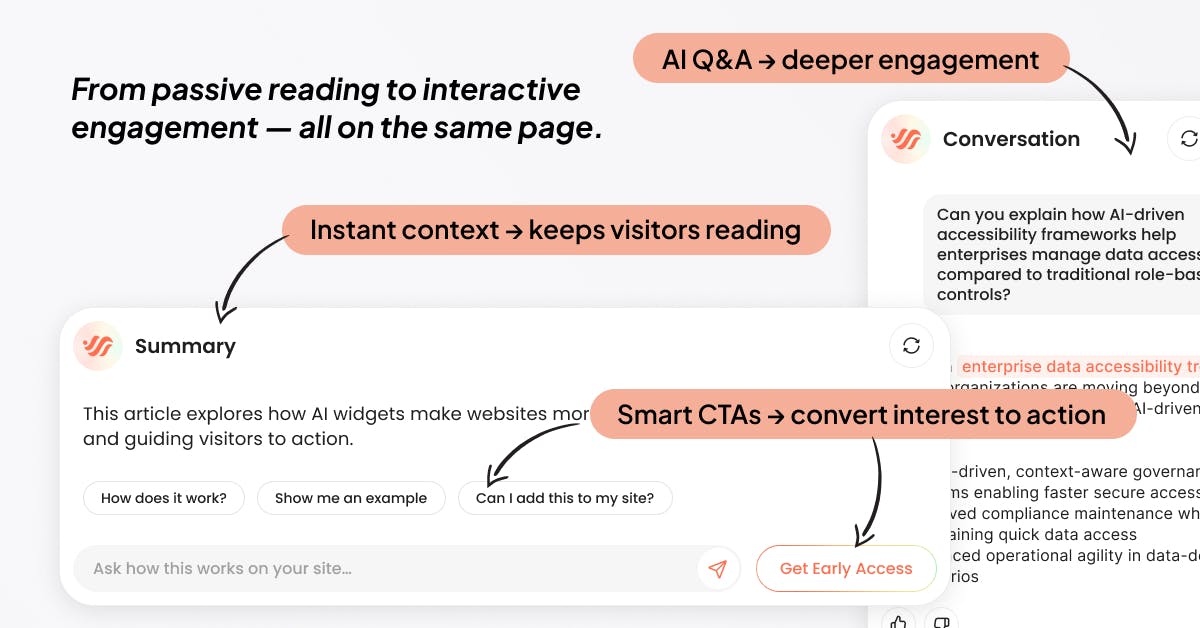
An AI widget can instantly summarize a blog, explain your product, or guide users to the right pricing tier —
all within the page they’re already on.
Think of it as turning browsing into a guided journey, not a guessing game.
3. What “AI Engagement” Looks Like in Practice
Examples you can visualize:
- On a blog, the widget summarizes content and suggests related topics.
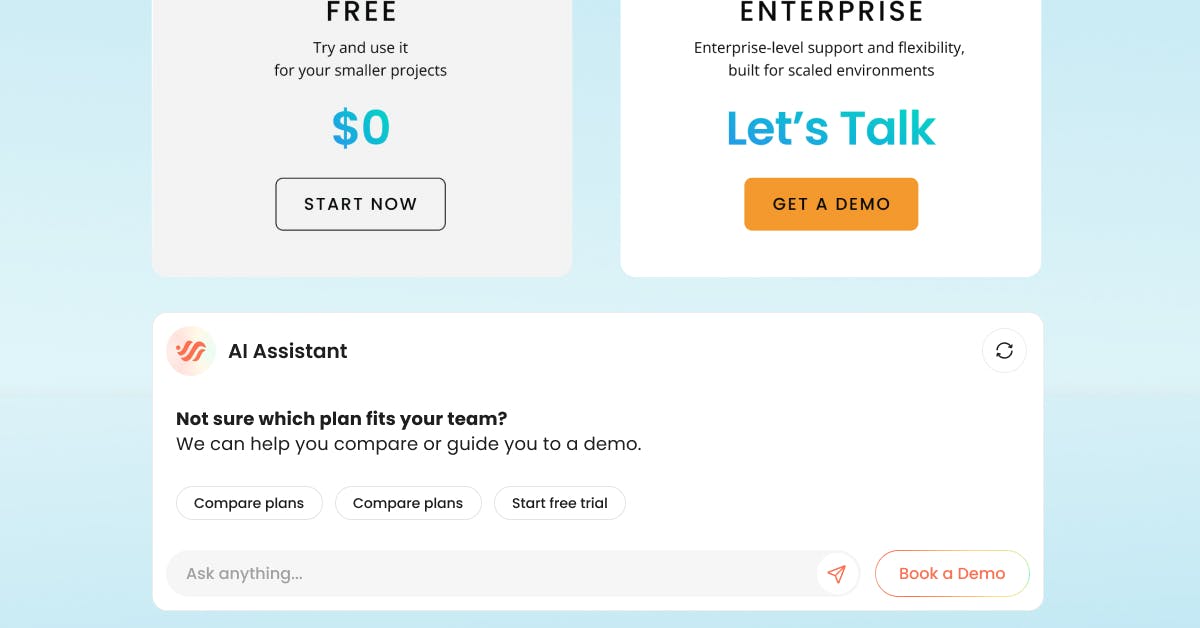
- On a pricing page, it explains plan differences and invites a demo.
- On a product page, it helps clarify features and guides users to sign up.
Each of these micro-interactions replaces friction with flow — moving visitors closer to action.
4. The Results: Higher Engagement, Better Conversions
Websites using contextual AI interactions typically see:
✅ Longer session duration
✅ Lower bounce rates
✅ More sign-ups and demo requests
✅ Deeper content discovery
AI doesn’t just answer questions — it reshapes the entire user journey.
Conclusion
The future of engagement isn’t about adding more pop-ups or animations — it’s about adding intelligence to every page. With Wynflow, websites evolve from static screens into active, conversational experiences.
FAQ
Wynflow AI widgets personalize interaction by answering visitor questions, summarizing content, and guiding them to relevant pages — all without leaving the page.
Absolutely. AI can enhance any site — even a single-page one. However, results improve when there’s more content or when you connect extra data sources (like blogs, PDFs, or FAQs) so the AI can give richer, more accurate answers.
Tip: On smaller sites, start with one high-traffic page and feed key documents or FAQ-lists into the AI to boost relevance.